By David Tadman
Although he is renowned for his prowess in martial arts action films—and respected by Hollywood’s top celebrities for his talent both in front of and behind the camera, too little has been reported about Richard Norton’s lifelong journey as a martial artist. The days, weeks, months, and years he has dedicated to research and training across countless combat disciplines have earned him the well-deserved title of a LIVING ENCYCLOPEDIA OF THE MARTIAL ARTS.
From the early days of the 1970s, when he protected and trained some of the most famous stars in music and film, to being sought out by the most influential martial artists to exchange ideas and ideals regarding their training; Richard has secured his place in history as one of the most influential masters. He is one who continues to seek new ways to express the human body through martial arts and other forms of physical fitness.
Drawing on his background in the security sector, Richard Norton understands how interactions with combative individuals can either escalate or, with the right approach, be defused into a state of mutual understanding, without ever resulting in a physical confrontation. Thus, while Richard Norton stands on equal footing with the world’s finest fighters, he prefers to be the “peaceful warrior,” one who de-escalates rather than provokes.
From martial artist to action actor, and in every role in between, Richard Norton is a seeker of self and a master of all trades. Richard recently sat down with David Tadman for this interview.
AI: You are a veteran in the martial arts world and the action cinema genre. What do you feel has contributed to your longevity?
RN: First of all, I believe my longevity—at least in the action cinema genre—is due to my passion for martial arts. From day one, since I was a teenager, my through-line—my number one goal—was simply to become the best martial artist I could be. That doesn’t mean I feel I’m better or worse than anyone else. I just wanted to be the best version of myself.
As a result of that ambition and passion, everything good in my life has come from it. My work in movies, my time as a bodyguard—those were all byproducts of my desire to pursue excellence and never accept mediocrity.
I think consistency is also key—consistency in training and in participation. I often say it takes courage to “dare to participate.” That means stepping out of your comfort zone, whether it’s taking on a role that scares you or training with someone in an unfamiliar discipline. It can be intimidating, but you do it anyway. That mindset has given me longevity.
There’s a book called Critical Path by R. Buckminster Fuller. It’s a complex read, but one concept he discusses is “precession.” In simple terms, when you pursue what you’re meant to do—not for fame or money, but because it’s your purpose—the universe often supports you. Sometimes just in time. You might be short on rent, and suddenly a check arrives.
Another aspect of this idea is the “90-degree effect.” The example is a bee flying to a flower. The bee’s goal is nectar, but as it collects it, pollen sticks to its legs. That pollen transfer—pollination—creates life. That’s the unintended but vital outcome.
As a martial artist, if you pursue your craft with integrity, the “90-degree effect” is how others benefit. Students gain confidence, purpose, fitness, and skill. That’s the broader impact of your passion.
It’s also important to accept aging in martial arts. At some point, you have to remove ego from the equation. You become a teacher, someone who shares knowledge rather than proving toughness. For example, when I teach jiu-jitsu, I demonstrate drills, but I don’t roll with young fighters looking to prove something. I know my ego wouldn’t want to lose, so I avoid that situation altogether.
Think about it—if you have 20, 30, or 40 years of knowledge and you injure yourself trying to act like a 20-year-old, what a waste that would be. The goal is to stay healthy enough to pass on that knowledge. That’s when you truly understand what it means to be a martial artist.
I use this analogy: if I’m 40 and training students who are 15, eventually age alone will dictate that they surpass me physically. That’s natural. So my advice is—get over yourself. What matters is that you can still step onto the mat and share your experience. I used to tell students, “If you think you could beat me in five minutes, maybe after this seminar it’ll only take you two.” The point is, knowledge is power. It’s okay not to be the toughest person anymore. What matters is your experience and your ability to pass it on.
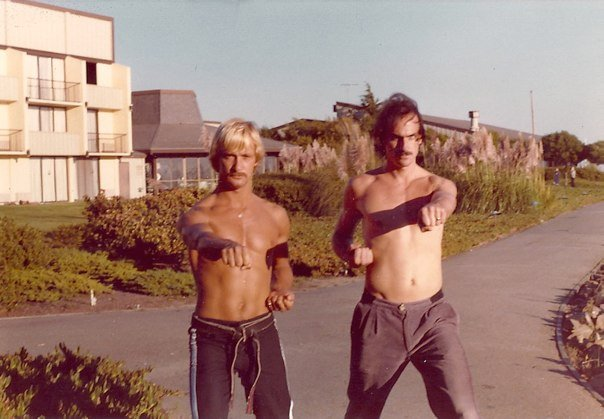
Richard Norton trained the famous musician James Taylor in the martial arts during a world tour in the mid-1970s.
AI: You are well respected by many famous martial arts action stars you’ve had the honor of working with. Can you tell us about working with Chuck Norris, Jackie Chan, and Sammo Hung, just to mention a few?
You are well respected by many famous martial arts action stars you’ve had the honor of working with. Can you tell us about working with Chuck Norris, Jackie Chan, and Sammo Hung, just to mention a few?
RN: When I look back now—20, 30, even 40 years later—I truly appreciate what an incredible journey it’s been and how fortunate I’ve been to work alongside people at the very top of their game.
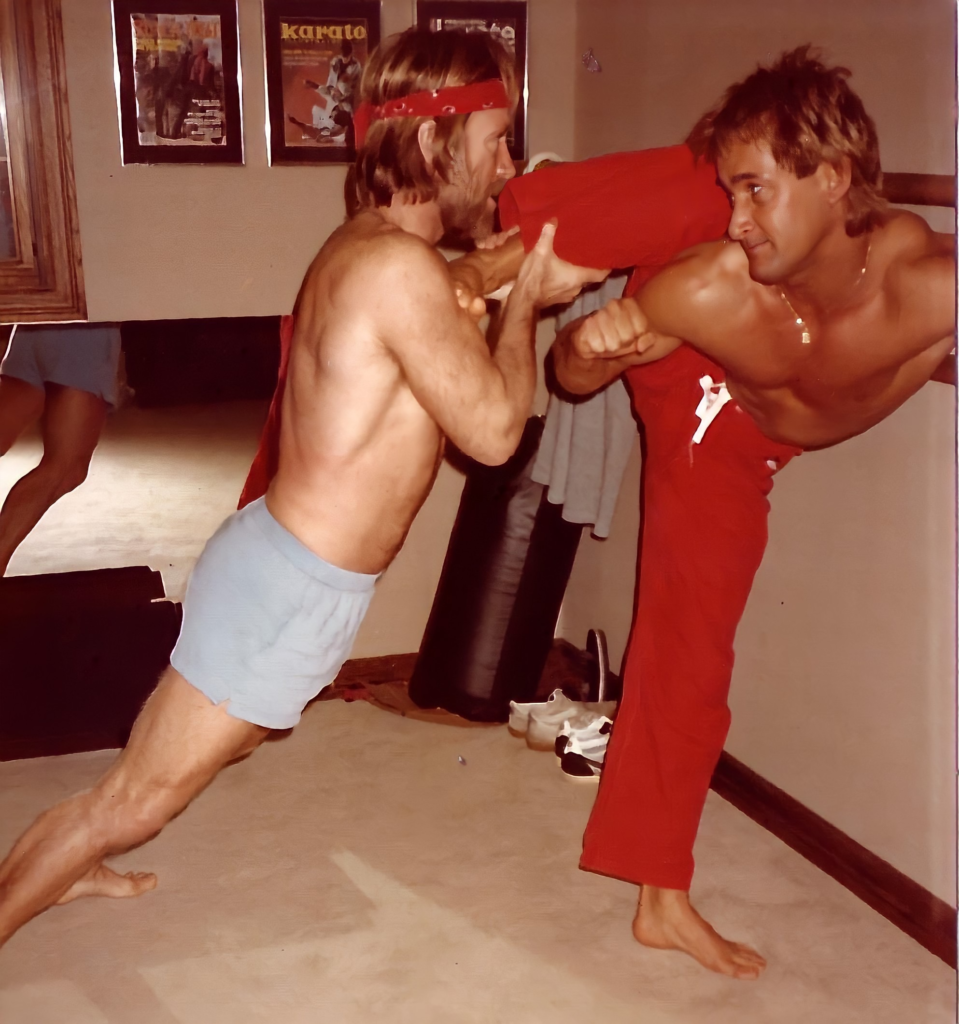
Starting with Chuck Norris—The Octagon was the first movie I worked on with him, where I played his nemesis, Kyo. That opportunity came after a trip to Australia in 1978, when we brought Chuck out to do demonstrations during some of the early kickboxing events we were holding. At the time, he was promoting one of his early films, Good Guys Wear Black.
We traveled across different states doing tournaments—Chuck demonstrating his Chun Kuk Do style, and I was demonstrating weapons. That exposure allowed him to see what I could do. So when I later arrived in the United States in 1979—after Chuck had told me, “If you ever get to California, look me up”—I took him up on it.
When I arrived, I called him immediately. He was in the very early stages of pre-production on The Octagon, one of the first ninja-themed films. Because he knew I could handle Okinawan weapons, he asked me to play his nemesis. That moment essentially kickstarted my entire film career.
And I have to say—there’s no better human being than Chuck. I can’t thank him enough, not only for giving me that opportunity but also for introducing me to legendary martial artists like Tadashi Yamashita, Benny “The Jet” Urquidez, Bill Wallace, and Peter “Sugarfoot” Cunningham. Doors that never would have opened for an unknown Aussie suddenly became accessible because of Chuck’s respect in the martial arts world.
What I’ll always remember about Chuck is how incredibly generous he is. Whether it’s fans approaching him at inconvenient times or interactions on set, he’s always gracious—taking photos, signing autographs, and making people feel valued. On set, he treated everyone—from crew to extras—with kindness. There was never any ego. He’s still a dear friend to this day—he was even the best man at my wedding in 1993.
As for Jackie Chan and Sammo Hung—people often ask how exciting it was to work with them. The truth is, I didn’t fully grasp who they were at the time. I wasn’t deeply immersed in Hong Kong cinema, so for me, it was simply another job.
But when I arrived in Hong Kong, it was a complete eye-opener. I quickly realized I was working with masters of their craft. And like Chuck, both Jackie and Sammo were incredibly gracious—something that’s important, because being a “gwailo” (a Westerner) on those sets could sometimes be tough.
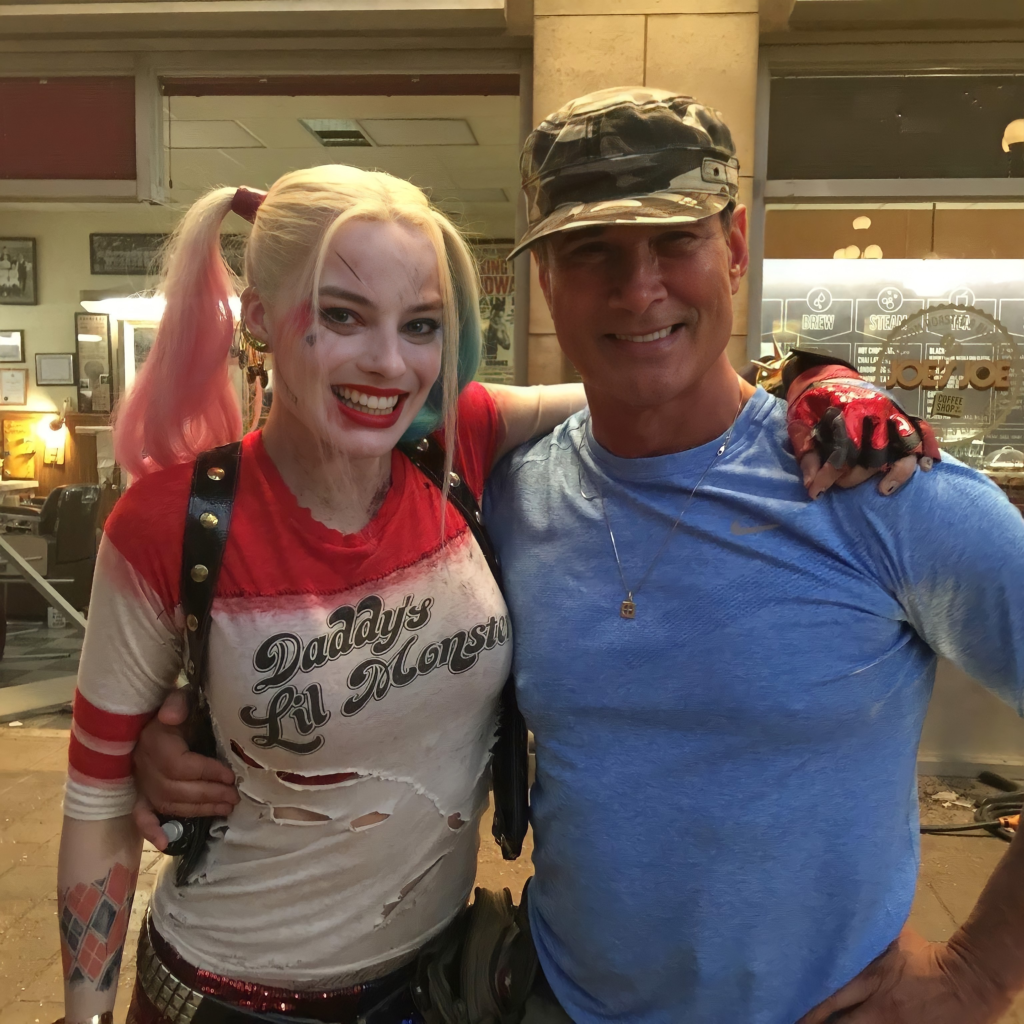
Fortunately, both Jackie and Sammo welcomed me. They included me in dinners, outings, and even took me shopping. I learned an enormous amount from them—not just about martial arts choreography, but about filmmaking itself.
I’ve always felt very fortunate to have worked with them. And I’d like to think that if I ran into either of them today, even after all this time, it would feel like no time had passed—that same sense of friendship would still be there.
AI: You were one of the first Western martial artists to be accepted into what was largely an Asian/Chinese industry. What do you think they saw in you that allowed that acceptance?
RN: One of the best answers actually comes from Jackie himself. In a clip I once saw, he said, “He can act, he can do comedy, and he has timing.” And timing was everything to Jackie and Sammo.
Jackie told me that many people came in with incredible kicks and physical ability, but if they didn’t have the timing that matched their choreography style, it just wouldn’t work. Fortunately, through my Goju training and kickboxing background, I naturally had the kind of timing that suited their style.
It wasn’t something I consciously developed for them—it just aligned. And I’ve always said, there are many martial artists with greater technical ability than me. But what helped me stand out was timing, adaptability, and attitude.
I remember working on Twinkle, Twinkle, Lucky Stars, where I had a major fight scene with Sammo. The choreography was very different from what I was used to, and I became frustrated trying to adapt. Shoji Kurata—who was already a legend in Hong Kong cinema—took me aside and gave me invaluable advice.
He basically said, “If you want to work here, don’t question anything. Don’t offer input. Just do exactly what they ask—again and again if necessary.” There was very little rehearsal. You might do something 20, 30, even 40 times on camera.
I took that advice immediately. I stayed quiet, worked hard, and accepted the physical demands—which, at that time, were often full-contact or close to it. Sammo respected that. He respected that I took the hits, that I had the timing, and that I didn’t try to impose my own ideas on their process.
There was a moment when a stunt coordinator tried to correct me, and Jackie stopped him and said, “He knows what to do.” That meant a lot. It showed respect—not just for my martial arts, but for my understanding of their system.
At one point, aside from Benny Urquidez, I was one of the only Western actors invited back to work with Jackie multiple times. That’s something I’m incredibly proud of.
Ultimately, I think what they saw was someone who could adapt, who respected their system, and who contributed without ego.
AI: Working in Asia and around the world for many years as an action actor and martial artist, what do you feel are the key similarities and differences when it comes to shooting action scenes in Asia versus America?
RN: The biggest difference, without question, is preparation—or the lack of it. In Hong Kong, at least back then, there was often no real script. You would arrive on set with little to no idea what you’d be doing that day.
In America, it’s the complete opposite. There’s extensive pre-production. Fight scenes are choreographed and rehearsed from start to finish. Everyone knows their role—the actors, the stunt doubles, the crew. You shoot a master of the entire sequence, then move into coverage—over-the-shoulder shots, inserts, reactions, and so on.
That simply wasn’t the case in Hong Kong.
Jackie Chan and Sammo Hung worked in a very spontaneous way. They would map out a handful of moves, shoot those, then regroup—sometimes even reviewing footage that night—to figure out what came next. The fight would evolve organically, piece by piece.
What that meant for me was that I had to be ready at all times. Someone—whether it was Jackie, Sammo, or a stunt coordinator—would quickly show you a sequence, and you’d step in front of the camera and perform it. Over and over again until it worked.
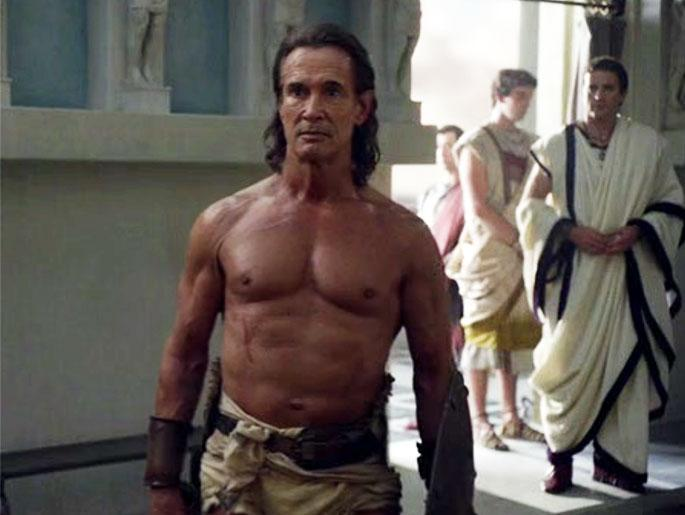
Because of that process, a single fight scene could take weeks to complete. My fight with Sammo in Twinkle, Twinkle, Lucky Stars took about three and a half weeks to shoot. In America, a sequence like that might be completed in two or three days.
Another major difference was the lack of union restrictions. There were no overtime rules, no stunt adjustments, and very little in the way of formal protections for stunt performers. They were paid a small monthly retainer, and the only time they really made extra money was when they doubled Western actors.
That’s why you sometimes see stunt doubles used even when it seems unnecessary—it was an opportunity for them to earn more.
The shooting style was also very different. In Hong Kong, they rarely shot a full master. Instead, they captured segments of action from different angles, constantly moving the camera to create energy and variety. The focus was on visual dynamism rather than structured coverage.
Then there were the stunt performers themselves. And I say this with complete respect—they were fearless to the point of being reckless. Some of the stunts they performed were incredibly dangerous: high falls, spinning in mid-air, landing on hard surfaces with little or no padding.
When you’re spinning like that, you don’t even know where you’re going to land. You can’t break your fall properly. It was brutal. I saw things that made me shake my head.
But you have to understand the context. Being part of Jackie Chan’s or Sammo Hung’s stunt team was like a guitarist being invited to join the Rolling Stones. It could define your entire career. So when you were asked to do something dangerous, you didn’t say no—because saying no could mean never working again.
In America, safety protocols are far more structured. There’s padding, planning, and a strong emphasis on minimizing risk. That wasn’t always the case in Hong Kong at the time.
So the biggest differences come down to spontaneity versus preparation, and risk versus safety.
AI: During the height of the Golden Harvest era, you became one of the most sought-after action cinema performers. Can you tell us about your martial arts background at that time, and whether you felt you were seen as an asset by your Asian counterparts?
RN: I think we’ve touched on some of this already, but to expand—one of the main advantages I had in Asia was simply that I was a Western actor. In their eyes, I was the “foreign villain”—taller, bigger, visually different. That made me ideal for antagonist roles.
As for my background, I started judo at 11, karate in my mid-teens, and later moved into kickboxing. Much later, I added Brazilian jiu-jitsu. So I had a fairly broad range of skills.
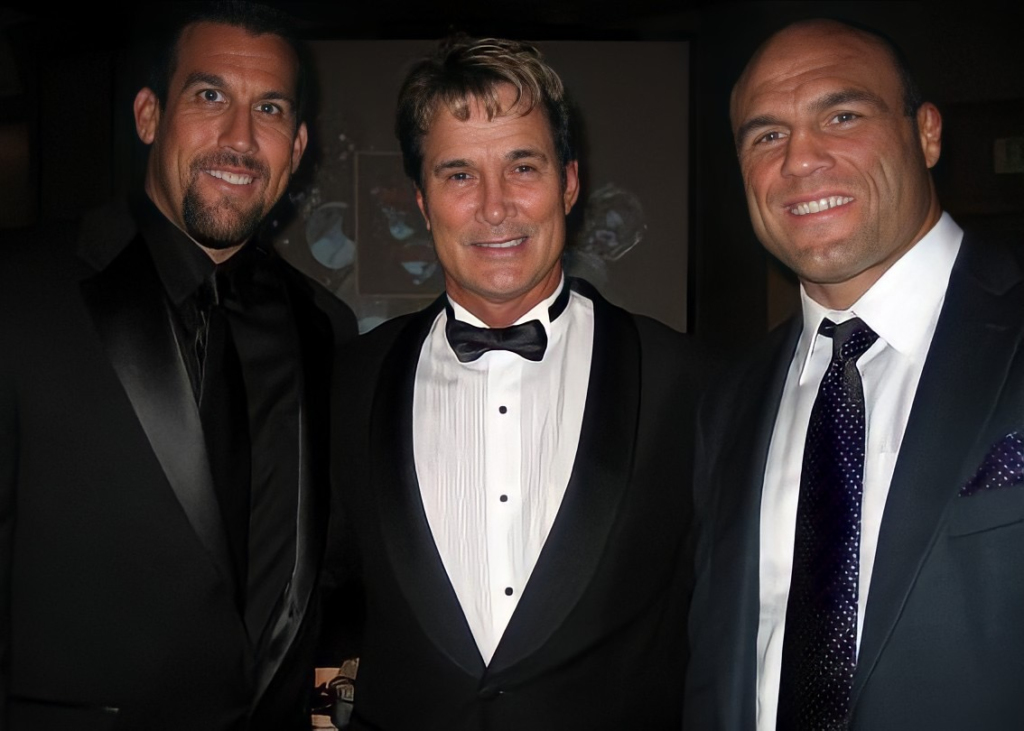
What I didn’t have was a background in traditional Chinese martial arts like Wing Chun or Kung Fu. But in a way, that may have worked in my favor—it gave the choreography a slightly different look.
I also believe I brought value as an actor. I understood the tone of Jackie and Sammo’s films. If you didn’t embrace the style—particularly the blend of action and comedy—you didn’t belong in those movies. You had to be willing to lean into the character, sometimes even exaggerate it.
Those films often had a tongue-in-cheek quality, with long, elaborate fight sequences. If you tried to play everything too straight, it wouldn’t work.
I remember Sammo once asking me, during Twinkle, Twinkle, “Why don’t my movies work in America?” This was before Rumble in the Bronx and his later success in Western television.
I told him honestly: “Where do you want me to start?” I explained that Western audiences were used to structured storytelling—clear scripts, tighter pacing. His fight scenes, while incredible, were often very long and sometimes pushed beyond what audiences found believable.
I said that once you cross into the unbelievable—like launching someone off a mini-trampoline for multiple airborne kicks—you risk losing the audience, unless you’ve established a world where that kind of action makes sense, like a superhero film.
At that time, Western audiences weren’t quite ready for that level of stylization. Of course, that eventually changed.
So in terms of being an asset—I think it came down to a combination of factors: my look, my timing, my willingness to adapt, and my understanding of the tone they were creating.
AI: You can truly be described as an encyclopedia of the martial arts. Can you tell us about your complete background in martial arts—then and now—and the instructors you’ve trained with, and what they mean to you personally?
RN: As I mentioned earlier, I started judo at the age of 11 in a suburb of Melbourne called Nunawading. My first instructor was a police sergeant, and I still remember how much his attention to detail and genuine care impacted me as a young, skinny, asthmatic kid stepping onto the mat for the first time. That experience taught me a great deal about integrity and what it truly means to be a martial arts instructor.
I began karate in my mid-teens, though even before that, I had a friend—John Rowe—who was learning karate from Mas Oyama’s book. He had a heavy bag hanging in his garage and was experimenting with board breaking, so I had some early exposure.
A few years later, John told me about a karate demonstration happening nearby. I went along and saw Tino Ceberano, who had only been in Australia for about six months at the time and was preparing to open a school near my home in Croydon. I was completely blown away. That was the moment I knew this was what I wanted to do with my life.
Karate appealed to me because I was small and relied more on speed and agility than strength. It felt like a more accessible form of combat for me at that stage compared to judo.
Through that path, I met Bob Jones, who was about ten years older than me and already something of a legend in security work. He wanted to create an eclectic Australian martial arts system, and after some persuasion, I joined him. Together, we founded Zen Do Kai in the 1970s. At one point, we had over 500 schools across Australia, and the system is still thriving today. I remain a co-founder and mentor within the organization.
Our style was heavily influenced by Goju—specifically Goju Kai—under Tino Ceberano’s instruction. That “hard-soft” philosophy—combining linear strikes with circular, flowing movements—proved invaluable later in my career, especially in Hong Kong choreography. I think that balance helped me adapt more easily than if I had come from a purely rigid or linear system.
In 1979, I moved to the United States, which opened up an entirely new chapter. I trained with Chuck Norris, Benny “The Jet” Urquidez in kickboxing, Peter “Sugarfoot” Cunningham, Tadashi Yamashita, and many others. I also trained with Dan Inosanto, which broadened my understanding even further.
Over time, my training expanded to include judo, karate, kickboxing, and eventually Brazilian jiu-jitsu, which has been a major focus for the last 30-plus years. I began training in BJJ in the late 1980s with Rickson Gracie—well before the UFC popularized grappling. That gave me a bit of an early start in integrating ground work with my stand-up skills.
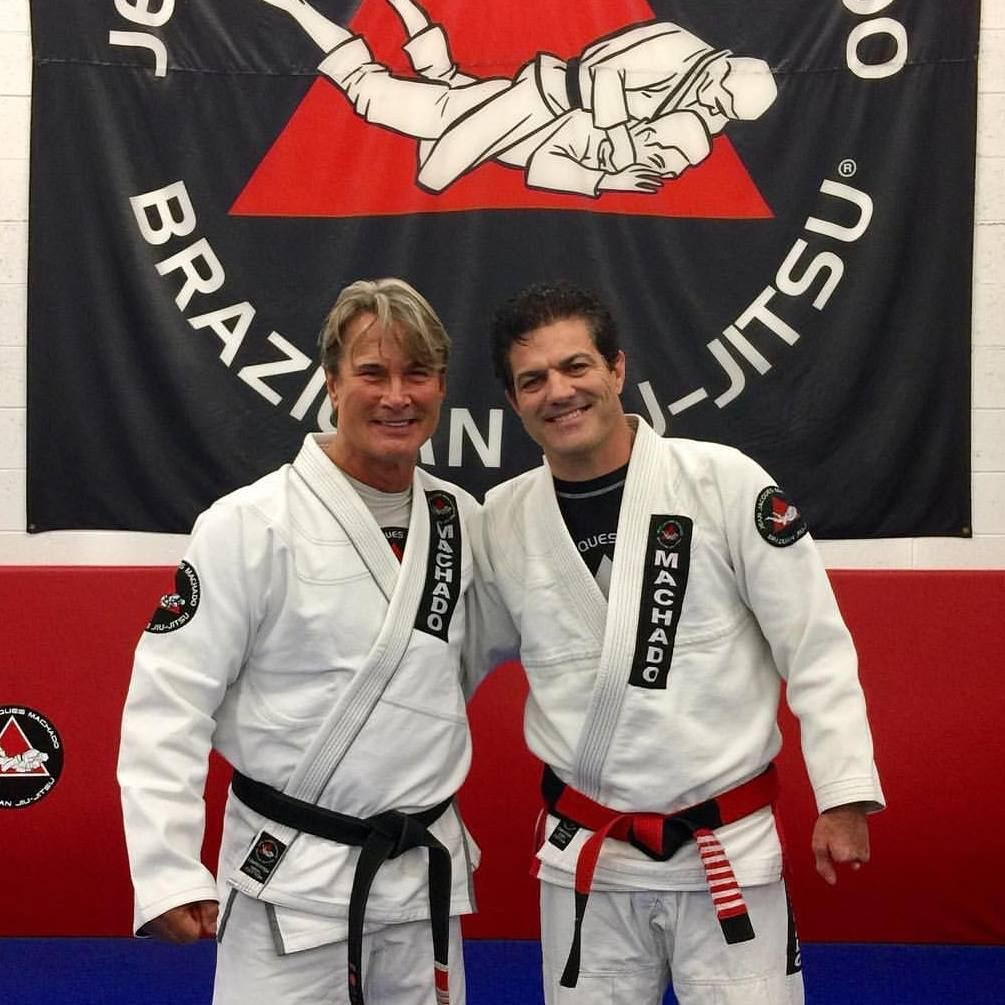
Later, through Renzo Gracie, I was introduced to the Machado brothers, with whom I’ve trained ever since. I was awarded my fourth-degree black belt by John Machado, and more recently, my fifth-degree black belt by Rigan Machado, an eight-time world champion. That journey has been incredibly meaningful to me.
AI: Who would you say are your personal martial arts heroes, and why?
RN: Without question, Tino Ceberano is at the top of that list. He’s like a father figure to me in martial arts. When you first start training, you don’t know whether your instructor is good or not—you simply don’t have the experience to judge. It’s only years later that you realize what you had.
Looking back, I know I had the best possible foundation with Tino. He created a sense of family, of community. We’d spend entire weekends training and learning together. He’s widely regarded as the godfather of martial arts in Australia, and for good reason.
Another major influence was Sifu Sal Ebanez, who came from Hawaii and was actually Tino’s senior in Goju. His impact on my journey was profound. Then, of course, Bob Jones—without him, I wouldn’t have entered the film world, moved to the U.S., or met Chuck Norris. His mentorship shaped so much of my life.
Then there are the legends I trained with in the U.S.: Benny Urquidez, Peter Cunningham, Tadashi Yamashita, Fumio Demura, and the Machado brothers. Each of them not only influenced me as a martial artist but also as a human being.
I’ve always said it’s not just the two hours on the mat that matter—it’s the other 22 hours in your day. How do you carry yourself? Do you have integrity? Do you treat people with respect? These are the qualities that define a martial artist.
There’s also something important I always try to share with younger students. When we talk about the people we look up to, there’s a tendency to say, “I owe everything to my instructor.” And while that’s true to a point, you cannot remove yourself from the equation.
Yes, Tino gave me my start. Chuck gave me my break in films. But if I hadn’t put in the work—the training, the discipline, the effort—none of it would have lasted.
Opportunities are just that—opportunities. Without the dedication to follow through, they don’t lead anywhere. Especially in the entertainment industry, no one hires you as a favor. You have to deliver.
So my message is this: respect your teachers, honor them—but also take ownership of your journey. You did the work. You earned your place. And it’s okay to acknowledge that.
AI: Why do you continually seek out new ways of training and new martial arts disciplines, even at a stage in your life where you could easily reflect on everything you’ve already accomplished?
RN: It really comes back to passion. That’s the driving force behind everything I do.
I’ve always said that many people go through life doing the same things every day. They go to work, come home, watch the same shows, go to bed, and repeat the cycle. A lot of them are waiting to start living—waiting until retirement, or until some future point when they’ll finally pursue what they love.
But there are no guarantees in life.
For me, martial arts is my passion, and because of that, every day has meaning. As long as I’m motivated and unwilling to accept mediocrity, I’m always moving forward. I often say that excellence itself may be unattainable, but the pursuit of it absolutely is not.
That’s what keeps things exciting. Every day presents the possibility of learning something new—whether it’s a technique, a perspective, or training with someone who can teach me something I don’t yet know.
There’s also a part of me that’s almost afraid to stop. I experienced that during COVID—sitting on the couch, watching Netflix, thinking, “This is a lot easier than training.” And that scared me. It made me realize how easy it would be to fall into comfort and stay there.
So I keep moving.
Buckminster Fuller talked about this idea in Critical Path—that when people set goals, achieving them is often less fulfilling than expected. So what do we do? We set new goals. We keep progressing.
He also spoke about the importance of staying in motion. Anything that remains still long enough eventually dies—whether it’s a plant, an animal, or a person. Life is about movement, growth, and evolution.
For me, that means continuing to explore new disciplines, new training methods, and new teachers. It keeps the journey alive. It keeps me engaged.
That mindset has also allowed me to continue working in film, even as my role has evolved more toward fight coordination than acting. That’s a natural progression with age, and I’m completely at peace with that. As long as I’m still part of the industry and still using my martial arts, I’m fulfilled.
Consistency is another huge factor. People often ask how I’m still training every day at my age. The answer is simple: consistency.
I don’t believe in extremes. Some days I might train for five minutes. Other days, it might be four hours. What matters is that I keep showing up. That consistency keeps both my body and mind ready.
And when you look at how martial arts—especially mixed martial arts—has evolved, it’s incredible. The level of skill today, combining grappling, striking, and strategy, is far beyond what we saw decades ago. It’s constantly evolving, and that evolution makes it exciting to stay involved.
Brazilian jiu-jitsu, in particular, has changed dramatically. Techniques that were effective years ago are now countered easily. The art continues to grow, driven by competition and innovation. So why do I keep going? Because there’s always something new to learn. And as long as that’s true, the journey never gets old.
AI: You clearly have a deep philosophical side. What is your life philosophy, and how does it keep you grounded?
RN: My philosophy really comes down to passion and purpose. If you can find what you’re truly passionate about, it will guide you, ground you, and give your life meaning.
The challenge is that many people never discover what that is.
I remember watching a documentary on Keith Richards not too long ago. People often focus on the “rock and roll” lifestyle, but what stood out to me was his passion. Even at nearly 80 years old, he’s still striving to be a better musician.
That’s what I relate to as a martial artist. We all express our craft in different ways—whether it’s music, chess, or martial arts—but the underlying principle is the same: a commitment to excellence.
One of my core beliefs is that there’s too much acceptance of mediocrity in the world today. People settle for being “okay.” But I think we should always strive to be better—especially in the areas we care about most.
That pursuit of excellence keeps me grounded.
Another thing that keeps me grounded is training with people who are better than me. When you step onto the mat with someone like Rigan Machado, you’re immediately reminded of how much there is still to learn. It humbles you.
That humility is essential. It keeps you honest, keeps you improving, and prevents ego from taking over.
So for me, it’s a combination of passion, continuous learning, and surrounding myself with people who challenge me. That’s what keeps me grounded and moving forward.
AI: The one true rock in your life, so to speak, is your wonderful wife, Judy. Can you tell us what she means to you and how she’s supported and grounded you throughout your journey?
RN: That question almost gets me emotional just reading it. Judy truly is the rock in my life. We’ve been together for 36 or 37 years now, and I couldn’t be more grateful for her.
Before we met, Judy had a career in television. But her life changed dramatically after a horrific accident in the Amazon jungle. When we met, she had already made the decision to step away from her career and support me in mine—and I can’t tell you how rare and selfless that is.
And it’s not in a chauvinistic sense at all. It’s about partnership. Whenever I travel for work—if it’s more than just a couple of days—Judy comes with me. We’re not just husband and wife; we’re best friends.
She’s also the person who keeps me grounded.
What’s remarkable is her mindset. After her accident—where she was given only a 2% chance of survival—she could have easily focused on everything she lost. She suffered a severe skull fracture, brain trauma, a stroke, and partial numbness. But instead of dwelling on that, she made a conscious decision not to listen to negativity.
She decided she was going to live—and not just survive, but thrive.
To this day, she doesn’t take medication, doesn’t rely on supplements, and lives a disciplined, healthy lifestyle as a strict vegan. Her mindset is extraordinary, and I learn from it constantly.
She’s the ultimate “glass half full” person. She never complains about what she lost—only appreciates what she still has. Whether it’s gardening or making jewelry, she throws herself fully into what she’s doing. And when I watch her, I see the same principles I believe define a martial artist—passion, presence, and commitment.
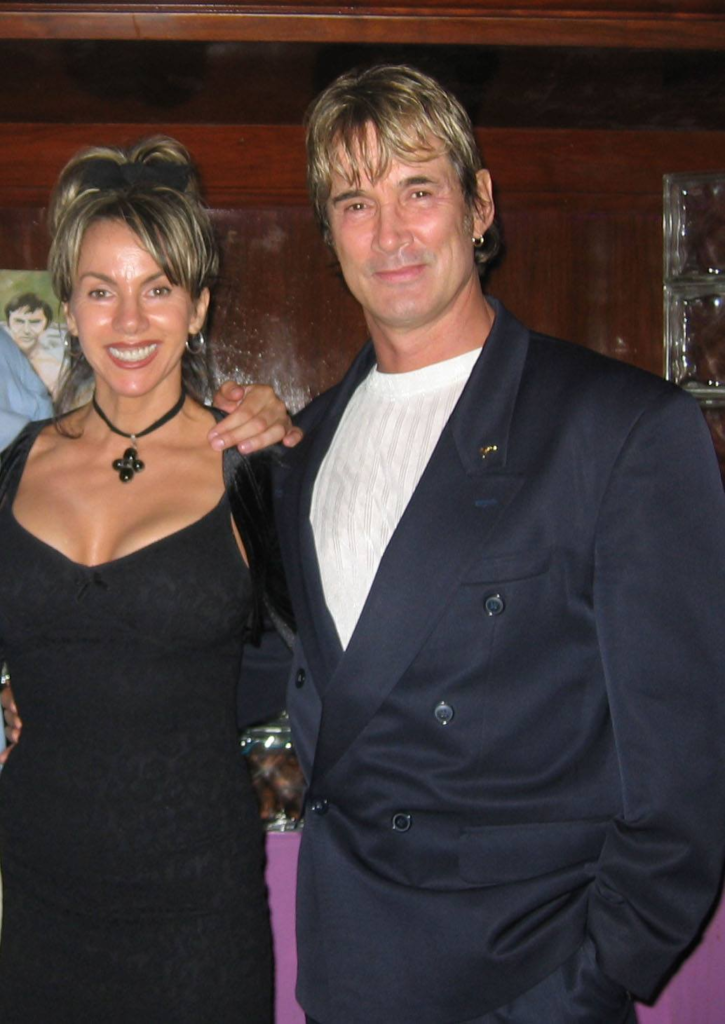
She expresses her passion through creativity and simplicity. Watching her find joy in something as grounding as gardening reminds me that fulfillment doesn’t have to be complicated.
She believes in me completely. She supports me unconditionally. And I honestly don’t know where I’d be without her.
AI: Many people may not realize that your wife has also worked in film with you. Can you tell us about that, and her experience with martial arts?
RN: Yes, Judy did appear in a few smaller roles in some of my earlier films. But there’s actually a story behind why that didn’t continue.
Because of her accident, she developed a delay in processing when it came to reading—especially memorizing lines. So learning scripts became very difficult for her. It wasn’t just stressful for her—it became stressful for me as well, because I was constantly concerned about how she was coping.
At a certain point, I said, “You know what, it’s not worth putting that kind of pressure on you. Just be with me, support me, and be there when I come home from set.” And that’s what we chose.
She did train in martial arts briefly—she did some karate with me in the late ’80s—but it wasn’t really her passion. Yoga, however, absolutely is.
Every morning at five o’clock, without fail, she gets up and does two hours of yoga. That level of discipline is incredibly inspiring. It’s just another example of her commitment to health and self-care.
And to be honest, when I try to get her to help me work through techniques for seminars, she’s the worst training partner you could imagine. She either stiffens up completely or goes totally limp like a rag doll—just to frustrate me until I give up. She knows exactly how to get out of it. (laughs) So no, she’s not actively involved in martial arts or film anymore, but her influence on my life and career is immeasurable.
AI: You’ve always maintained incredible physical condition. What’s your approach to training and diet?
RN: Training is a constant for me. Martial arts—whether it’s jiu-jitsu, karate, or anything else—is a big part of staying fit. But alongside that, I’ve been doing progressive resistance weight training since I was about 14 years old.
Back then, I was inspired by bodybuilding magazines—Joe Weider publications, with people like Arnold Schwarzenegger on the cover. I just wanted to build strength and muscle, and that foundation has stayed with me ever since.
If I had to choose one form of exercise to maintain my physical condition, it would be weight training. It strengthens ligaments and tendons, and if done properly, it can be both anaerobic and cardiovascular.
Even now, I aim for at least three weight training sessions per week, in addition to my martial arts training.
When it comes to staying in shape, the key is consistency. You don’t have to go all out every day. Some days you might feel terrible—just do ten minutes. Keep the habit alive. That consistency keeps your body ready.
Diet-wise, I’m essentially pescatarian. At home, we eat mostly vegan because of Judy, but I’ll occasionally have fish, especially salmon. I eat a lot of fruits and vegetables and try to stay disciplined.
Fasting is also a big part of my routine. I follow an intermittent fasting approach—usually 16:8 or 18:6, meaning I eat within a limited window each day. I’ve actually been fasting since I was 14. I used to do one full day of fasting each week, and occasionally longer fasts—three days or even up to ten days with just water, a bit of honey, and apple cider vinegar.
Another important part of my routine is breathwork—specifically the Wim Hof method. Every morning, I do breathing exercises that involve controlled hyperventilation and breath holds. It’s designed to strengthen the cardiovascular system and improve resilience to stress.
I also take cold showers daily—about two and a half minutes. It’s about exposing your body to controlled stress, which builds both physical and mental toughness.
Modern life insulates us from discomfort—we control temperature, avoid extremes. But historically, humans were exposed to nature in all its forms. Practices like breathwork and cold exposure help reconnect us to that.
So my routine is a combination of martial arts, weight training, clean eating, fasting, breathwork, and cold exposure. It’s a lot—but it’s part of my lifestyle, and I believe it’s a major reason I’ve been able to stay healthy and active.
AI: Before your success in martial arts and action cinema, you worked in security and the nightclub industry, protecting some of the biggest names in music and film. Looking back, what stands out from that time, and who did you most enjoy working with?
RN: That period of my life was incredible. One of my first major jobs, through Bob Jones, was working security for The Rolling Stones in 1973. I still remember teaching Mick Jagger karate at four in the morning in hotel rooms while we were on tour. It was surreal.
From there, I went on to work with artists like Stevie Nicks, Joe Cocker, Fleetwood Mac, David Bowie for eight years, Linda Ronstadt and James Taylor for 14 years, and even ABBA. It was an extraordinary journey.
What made it special wasn’t just the fame—it was getting to see who these people really were behind the public image. Someone like David Bowie, for example—what people saw on stage, especially during the Ziggy Stardust era, was a character. But behind that was a deeply passionate, dedicated artist.
The same goes for all of them. You don’t sustain a career like Mick Jagger or Linda Ronstadt without relentless passion and a commitment to excellence. Being around people operating at that level taught me a lot.
James Taylor and Linda Ronstadt were particular favorites. James is one of the nicest people you could ever meet. I used to train him and some of the band members daily while on tour—getting them warmed up, stretching, and staying fit.
In fact, Rolling Stone magazine did an article in the ’80s about bands coming off tour in better shape than when they started—something that was unheard of at the time. That was largely due to the routines I implemented.
What stood out most was that none of these people were ever satisfied. Linda, for example, could sing anything—opera, rock, musical theatre—but she was constantly seeking new vocal coaches, always trying to improve. That mindset reinforced everything I believed about striving for excellence.
AI: Working in security can be dangerous. What are some common mistakes people make in high-risk situations?
RN: One of the biggest misconceptions is that the job is about physical dominance. It’s not. The goal is to avoid violence whenever possible.
The real skill lies in de-escalation—using communication to prevent a situation from becoming physical in the first place. That’s something many people overlook.
Back when I worked nightclub doors, there were no cameras. If something happened, it came down to your word against someone else’s. Today, with CCTV everywhere, you’re accountable for every action.
If you throw a punch, you’d better have a very good reason—usually that you were in genuine fear of serious harm. Otherwise, it can come back on you legally and professionally.
That’s why understanding the “pre-fight” phase is so important—the seconds leading up to a confrontation. Can you read the signs? Can you defuse the situation before it escalates?
A lot of martial artists are trained for what happens after the first punch is thrown—but not enough emphasis is placed on what happens before that.
Experience also plays a role. Newcomers often underestimate the reality of street confrontations. Unlike a dojo or competition setting, there are no rules. A street fighter may only know one or two techniques, but they’ll execute them with full intent and without hesitation.
That intent is what makes them dangerous.
As a security professional, you have to stay alert at all times. You can’t afford to switch off, even for a moment. Situational awareness is everything—reading body language, recognizing aggression cues, understanding your environment.
It’s about being proactive, not reactive.
AI: Do people still seek your expertise for security consultations?
RN: Yes, they do—mainly in the form of seminars and consultations. I’ll often speak to security teams or martial arts schools, sharing insights from my years in the field.
I focus a lot on real-world application—teaching pre-fight awareness, in-fight response, and post-fight considerations. It’s about helping people understand how their martial arts training translates into real-life situations.
One of the key areas I emphasize is adrenaline. When you’re in a high-stress situation, your body goes into fight-or-flight mode. You lose fine motor skills and rely on gross motor responses—basic, instinctive actions.
That’s why techniques for self-defense need to be simple and effective. Complex movements often break down under pressure. So I help people bridge that gap—understanding the difference between training in a controlled environment and responding in a real-world scenario.
AI: You’ve remained incredibly active in film, both in front of and behind the camera. What have you been working on recently, and what’s coming up next?
RN: I’ve definitely been busy—more so in recent years as a fight coordinator than as an actor, which is a natural progression given my experience in action films throughout the ’80s and ’90s.
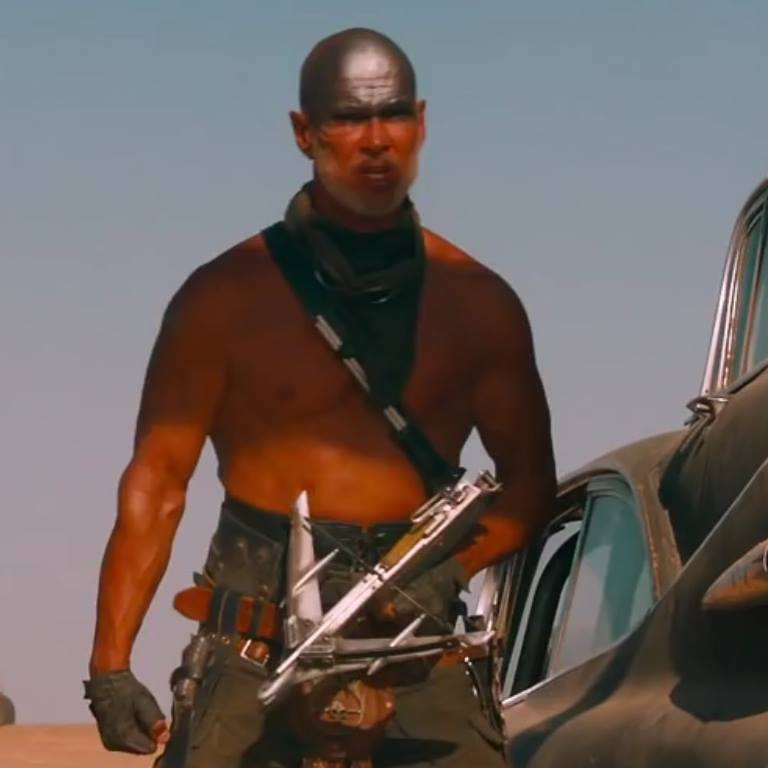
I’ve worked on projects like Mad Max: Fury Road, Ghost in the Shell, Suicide Squad (both films), and Triple Frontier, just to name a few. That side of the industry—choreographing and coordinating action—has become a major part of what I do.
I’m about to head back to Australia to begin work on the next Mad Max film, Furiosa. It’s going to be a five- to six-month shoot, and I’ll be handling fight coordination on that as well, which I’m really looking forward to.
Beyond that, I’ve been cast in a new film called Scar Tissue, where I’ll be playing the lead. It’s probably one of the most exciting roles I’ve been offered. It’s more character-driven—similar in tone to Unforgiven—set in the Australian outback.
I play a returning war veteran who has stepped away from violence, running a supply store in a small town. But as corruption and pressure build around him, he’s forced back into that world. The action is there, but it’s really about the character and the story, which is what makes it so compelling for me.
AI: You worked on the critically acclaimed Mad Max: Fury Road. What was that experience like, and what are your expectations for Furiosa?
RN: Working on Fury Road was an incredible experience. To be part of such an iconic franchise, under the direction of George Miller, was something special.
I wasn’t just coordinating fights—I also had a role in the film and got to perform a fight scene with Charlize Theron. We shot in Namibia, which made for a very intense environment, but also an unforgettable one.
Beyond the work itself, I had the chance to explore Africa—visiting game reserves, seeing wildlife up close. It was an extraordinary experience on every level.
With Furiosa, it’s going to be even bigger. It’s a prequel, exploring the origins of Furiosa’s character. Anya Taylor-Joy is stepping into the lead role, with Chris Hemsworth also involved, so it’s an exciting cast.
I’ll also be working again with Guy Norris, who I’ve collaborated with for over 30 years. Being part of that team again is something I’m really looking forward to.
AI: You’ve worn many hats—martial artist, actor, stunt coordinator, choreographer, and second unit director. Which role do you enjoy the most?
RN: Acting is still my favorite. There’s something about stepping in front of the camera, building a character, and taking on that challenge that I find incredibly rewarding.
It’s also the most intimidating. When you’re carrying a lead role, there’s a lot of responsibility—whether the film works or not can rest heavily on your shoulders. But that pressure is part of what makes it exciting.
Choreography and directing are enjoyable as well, but acting is where I feel most creatively fulfilled.
AI: We live in a world filled with uncertainty—conflict, anxiety, and instability. Do you think the role of the martial artist has shifted more toward the philosophical and introspective, rather than purely physical?
RN: I think it has to be both. The physical and the philosophical are equally important—they balance each other.
Martial arts isn’t just about what you do on the mat. It’s about how you live your life. I often say it’s not the two hours you spend training—it’s the other 22 hours that define you.
The physical side is still incredibly important. In today’s world, with all the stress and uncertainty, physical training provides an outlet—a way to release tension and maintain balance.
But the philosophical side is what gives it meaning. Concepts like honor, integrity, and self-awareness—those are essential.
So no, I don’t think the physical martial artist is a thing of the past. I think the complete martial artist is someone who develops both—the body and the mind.