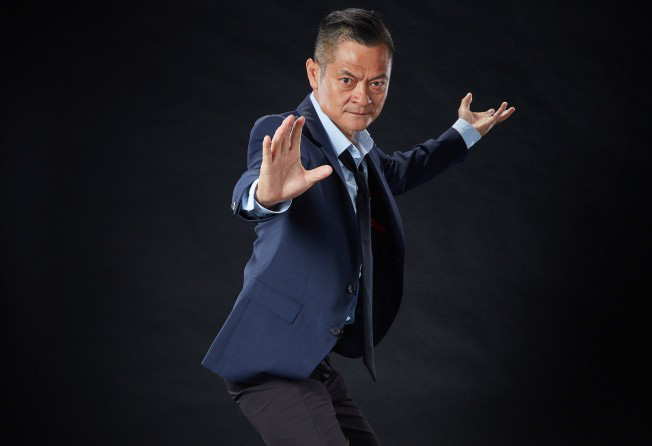
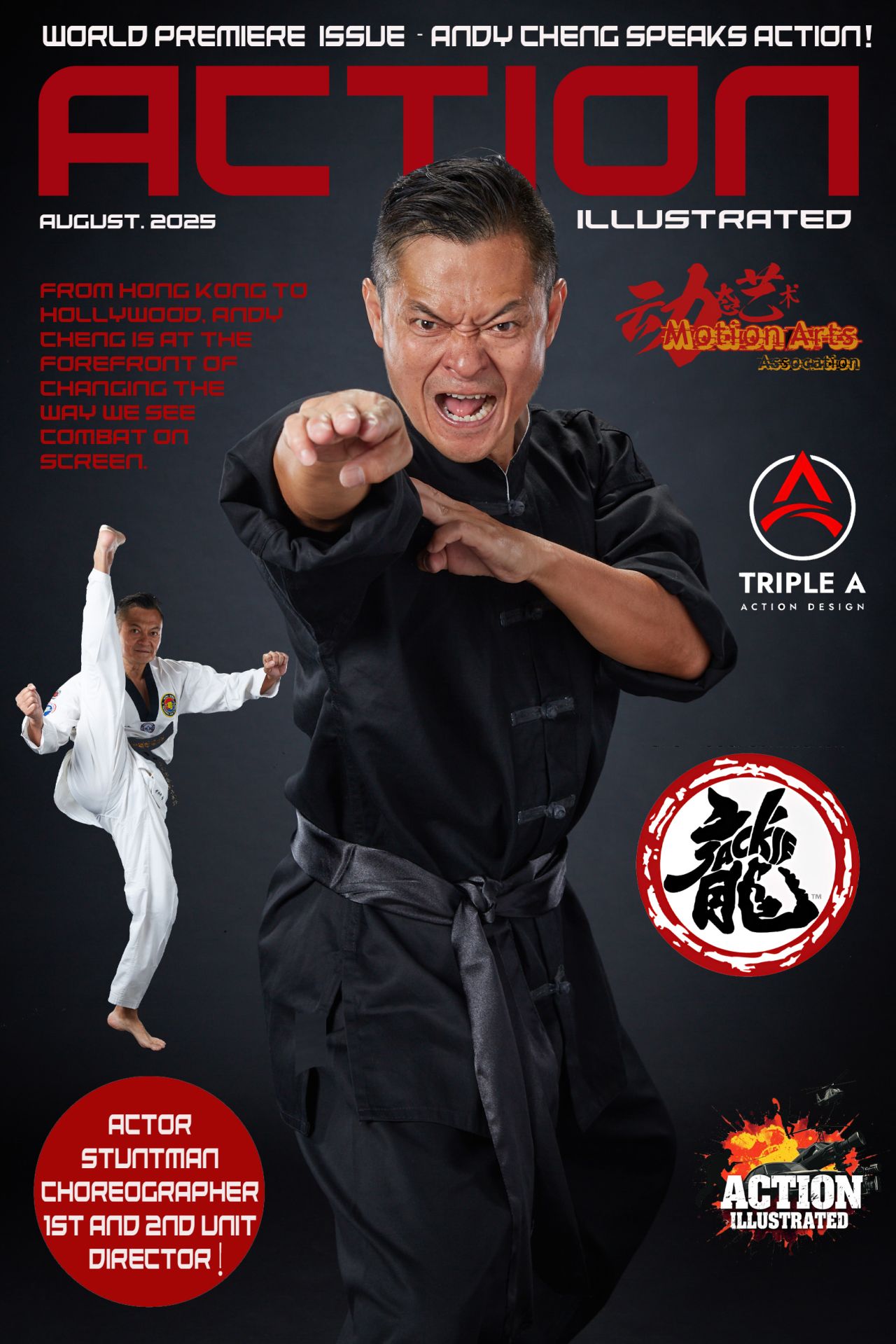
Andy Cheng Kai-chung fought his way to the top — literally. From humble roots in Kwun Tong, where he used to play on the location of one of Jackie Chan’s most famous stunts, Cheng has risen to become one of Hollywood’s top action directors and fight choreographers.
Cheng recently achieved international fame for co-choreographing the innovative bus action sequence in Marvel’s Shang-Chi and The Legend of the Ten Rings. Along the way, he has been an international Taekwondo champion, a stunt man and stunt double for Jackie Chan, who once saved his life when a stunt in the waters of Victoria Harbour went badly wrong, and a fight choreographer for martial arts legend Sammo Hung Kam-bo.
He’s worked with the Rock, and was even hired by esteemed art-house director Terrence Malick to choreograph the battle scenes between the European settlers and the Native Americans in Malick’s historical drama The New World. Cheng received the Bruce Lee Foundation’s Bruce Lee Award in 2021 for “demonstrating innovation and excellence.”
Los Angeles-based Cheng was one of the first members of the Hong Kong film industry to move to the US, relocating there in the late-1990s to work with Jackie Chan on Rush Hour, and to choreograph the fight sequences in Sammo Hung’s popular US television series Martial Law. He’s now working on consolidating a directing career in America.
Unlike his ‘Big Brother’ Jackie Chan, who learned martial arts at the legendary Beijing Opera School run by Yu Jim-yuen, Cheng was a competition fighter before he moved into the entertainment world. A Hong Kong champion, he represented the city for Taekwondo at the Asian Games and the World Games, and became a regional Bronze medallist in the sport.
Cheng says the he didn’t choose Taekwondo, it chose him. Taekwondo is a Korean martial arts style which focusses on kicking rather than punching. By contrast Hung Gar, the core style of many of Hong Kong’s screen martial artists, is focussed mainly on punching.
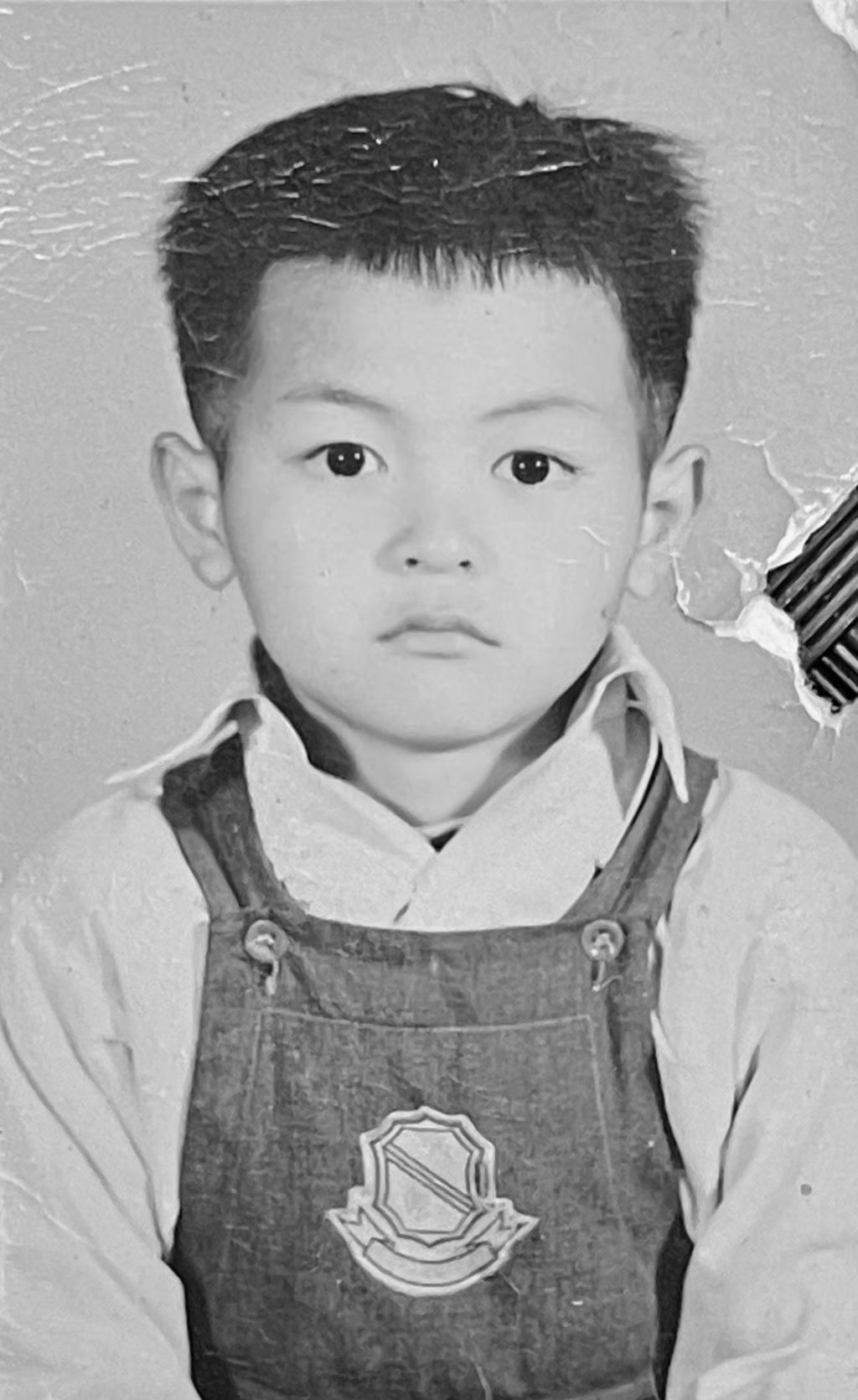
Cheng as a child. Photo: courtesy Andy Cheng
“I lived in Sau Mau Ping, and we were very poor,” says Cheng. “I was a street kid, and I had no money to do anything. There was a Hung Gar school, but I didn’t have enough money to go, as it was HK$10 a month. I learned a bit of Hung Gar on the street, but I had no proper lessons.”
He first started studying martial arts seriously at school. “Everybody had to pick a hobby, like playing in the school band. I really wanted to learn martial arts, and there was just one course at the school — Taekwondo. It was taught by a Korean master who came to the school on Mondays and Fridays. I fell in love with it very quickly and in three months, I was a yellow belt.”
Cheng participated in his first tournament while he was a yellow belt, even though the rules said competitors had to be at least a green. He won a silver medal. “From then on, I was crazy about it for 15 years. I’m the Hong Kong champion, and I’ve competed for Hong Kong three times, in two Asian Games and one World Games,” he says.
Cheng retired from his competitive career in 1991, after he won a bronze medal in the Asian Games in Taipei, he realised that he was probably not going to go any higher. “Taekwondo is from Korea, and they have a very powerful team. The Taiwanese are also very powerful, and they came second in the games. I felt that the bronze was the furthest I could go — I would need a lot of luck to beat the Koreans and Taiwanese to get the medals,” he says.
By this stage of his career, Cheng was already performing some stunts for TVB, who were then churning out period martial arts series known as wuxia, or swordfighting films — by the dozen. Cheng was coached by Lau Kar-yung, a nephew of the distinguished martial artist and film director Lau Kar-leung, the head of the legendary ‘Lau clan’ of martial artists.
Cheng formally auditioned for TVB in 1991, and was chosen to take part in a three-month long test of skills. “They offered training in three parts,” Cheng remembers. “Tumbling and wirework (a complex rigging system which is used to simulate flying), martial arts and weapons, and acting. You learned everything you could in those three months, and then they tested you. If you passed, you got a two year contract.”
Cheng did pass the test, and started work at TVB. The schedule was grueling, but the pay was stable, he remembers. “I worked for them for six years as a stunt double, doing 25 shows a month — if you worked as a stunt double, you got double pay, and if you worked nights, you also got double pay. I would work in the day outside on location and at night, I would work in the studio.”
He gave up on the idea of an acting career while at TVB. “I wanted to be as star like Jackie Chan at first, but I quickly realized that I was not good enough at acting,” he says. “So I decided to follow the path of stuntman, fight choreographer, and action director, as I realised I could earn a good living that way.”
Cheng started moonlighting as a stuntman in films while still contracted to TVB, and that led to his dismissal. While he notes that this was a common practice, he was pictured on a film set in a newspaper, and was let go. But luckily, Sammo Hung and Jackie Chan called around this time and offered him a job as a stuntman on 1997’s Mr Nice Guy, which Hung was directing for Chan in Australia. Cheng accepted immediately.
“Sammo and Jackie are both legends,” says Cheng, who remembers sliding down the same concrete bank that Chan used for a well-known stunt in Police Story as a youth. “Their action director Cho Wing called and said, do you want to work with Dai Go (Big Brother, Chan’s industry nickname) and Dai Go Dai (Big Big Brother, Hung’s nickname). I said yes straightaway. It was an honour, but there was also a lot of pressure. Sammo can ask you to do crazy things, so I knew it would be a challenge. To be honest, I thought it would kill me!”

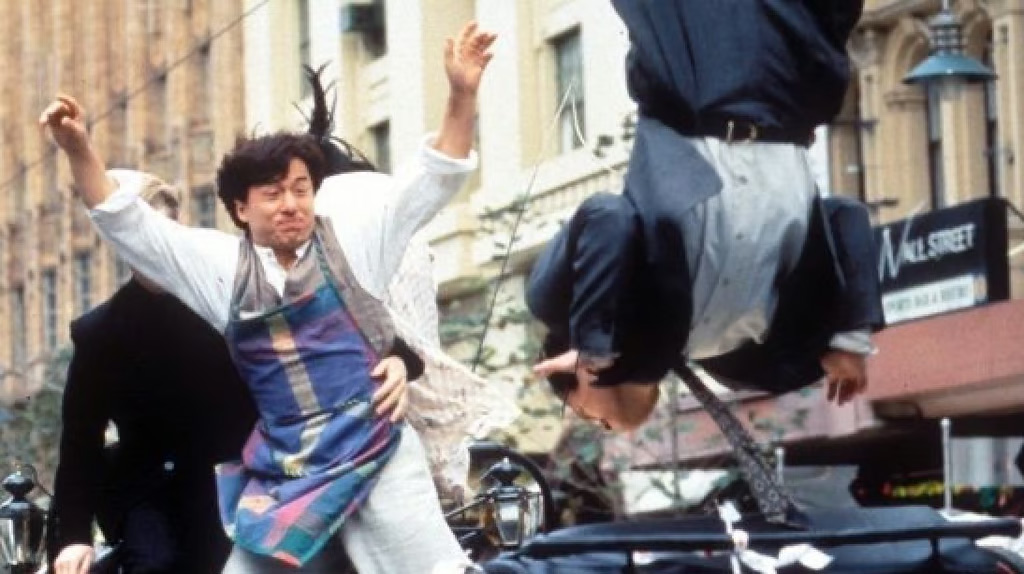
Cheng (right) performs a stunt alongside Jackie Chan while shooting “Mr Nice Guy”.Photo: courtesy Andy Cheng
Putting the acrobatic skills he had learned at TVB to good use, Cheng survived, and joined the venerable Jackie Chan Stunt Man Association. Chan had formed the Association in 1979 to give stuntmen — who are generally freelancers — some job security and health care.
Cheng went on to work on a number of films for Chan, including Who Am I?, Rush Hour, Rush Hour 2, and Shanghai Noon. He would act as a stunt double for Chan when, for instance, Chan had sustained an injury and couldn’t perform a certain move. Cheng often appeared as a henchman, and would usually receive a pasting from Chan in a fight sequence.
Working with Chan was challenging but fun, and Chan was always the consummate professional, says Cheng. “After working with him on Mr Nice Guy, I understood more about his style and what he liked to see. That proved to be a good foundation for our relationship. By the time we got to Rush Hour, we were a good team,” he says.
Chan prefers to work with stuntmen and martial artists he knows, as it’s safer for everyone, Cheng says. If everyone knows how everyone else fights, and what their particular stunt skills are, the chances of accidents are minimised. “Jackie likes to work with people he trusts,” explains Cheng. “That way, he has less to worry about, and can try new ideas out. That’s why he likes to always have his stunt team around him.”
The stunt team operate like a large extended family, and no one ever really leaves in spirit. “We are close, like brothers ands sisters,” Cheng says. “I got really close to the team while making Who Am I?, which we filmed in Africa. We all lived together in a big house, we ate together, and we went to the movies together. We even went shopping together at the weekend! Jackie was our Big Brother, he took care of everything for us.”
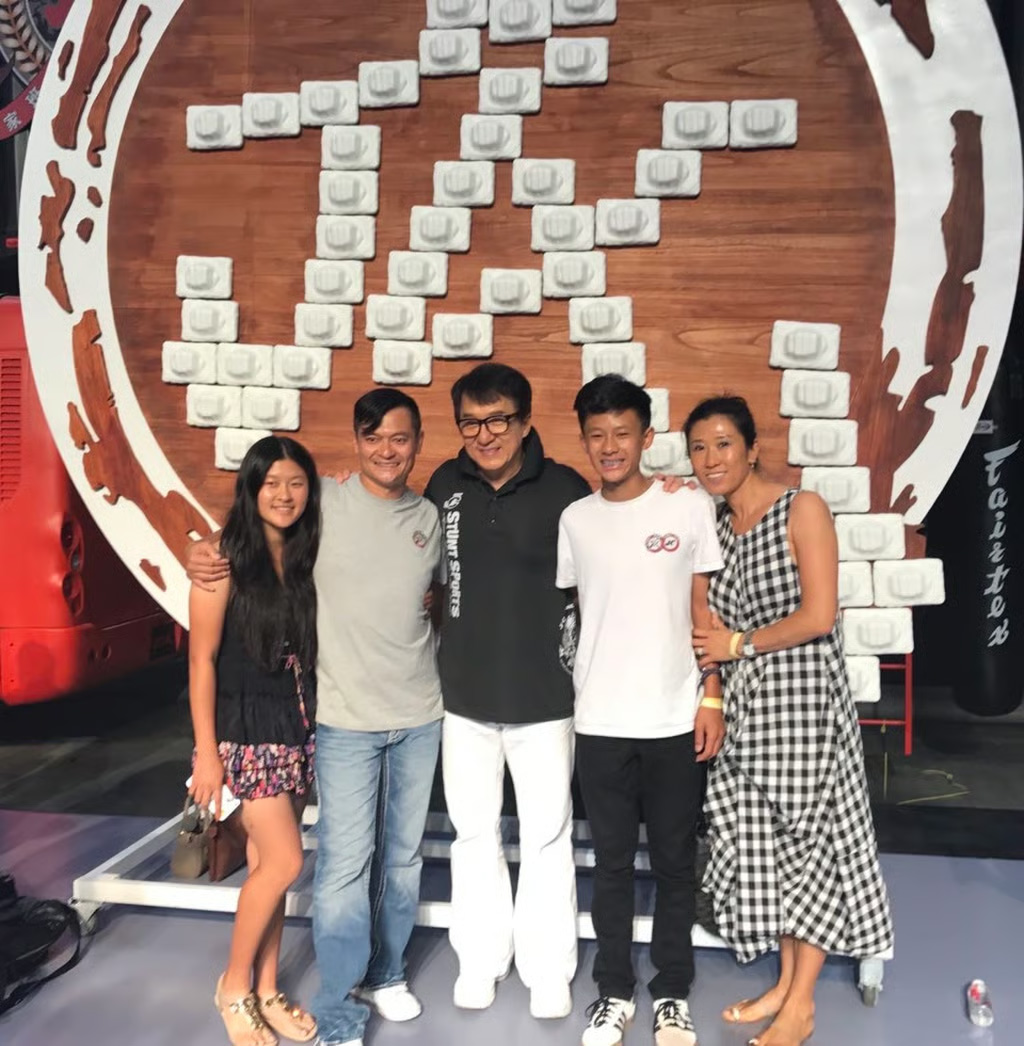
Cheng with his family and close friend and mentor Jackie Chan. Photo: courtesy Andy Cheng
Cheng’s loyalty to Chan runs deeper than the stunt team, Chan saved his life when a stunt involving a boat in Victoria Harbour went wrong during the filming of Rush Hour 2. Cheng had suggested a stunt that involved him falling into the water from a 20-foot high moving boat. The idea was that Cheng would fall in and the boat would keep moving.
“As we didn’t shut down the engines, they created a current,” said Cheng, noting that there was no safety diver in the water to spot for trouble. “Under the boat, two big propellers were moving the water like a fan, and I was sucked to the back end of the boat, spinning like I was in a washing machine. I held my breath, but I knew I could not hold it forever.”
“It was dark and no one on the boat could see anything. They were trying to see me back near where I had fallen in, 500 feet away, and they shone a light there to search for me. But I was actually right below them,” he says.
Strange thoughts occur close death, and Cheng can remember that he felt like he had let his father down. “My Chinese name Kai-chung means ‘continue the family name’, and I kept thinking that, as I did not have a son, I had failed. I kept thinking that if I died, my father would die, too. I was talking to myself, saying, ‘Andy Cheng, this is no fun anymore’. It was odd, as later I remembered that I had all these thoughts in English, and my English was not good back then,” he says.
Jackie Chan’s persistence finally saved him. “Normally when accidents occur in stunts, people will walk away from them, but luckily for me Jackie, my Big Brother, was there and he didn’t walk away, he kept searching. For some reason, he looked down behind the boat and there I was, spinning.”
The boat had a jet ski platform attached to the back, and that was what saved Cheng along with Chan’s big hands, he says. “Jackie jumped down on to the jet ski platform and reached in to get me. He has big hands and they are strong, as he has done a lot of handstands in his life, that is what saved me. He grabbed me by my shoulder, which is a difficult part of the body to grab, and I was saved. I really thought I was going to die that day.”
Injury and danger are a daily part of a stunt man’s life, and Cheng says he brushed the incident off. But stuntmen do not become inured to fear, he says. “You can’t lose face in front of your Brothers, but I do get scared,” he admits. “Most stunts that you do are new, and no one has done them before, so you’re not quite sure how they will go. It may be the last stunt you ever do. Every time I successfully complete a stunt, I feel lucky in my heart,” he says.
Cheng left the Jackie Chan Stunt Association around 2000, as he wanted to continue his career in the US. He formed Stunts Unlimited and worked as stunt coordinator and fight director on the Rock’s Scorpion King and The Rundown, and worked as stunt coordinator on the film adaptation of Twilight, among others. He also directed a feature, End Game.
He’s justifiably proud of his work on the bus fight scene in Shang-Chi, which he designed with the late Brad Allan, one of his brothers from the Jackie Chan Stunt Association. (Allan, a popular figure on the martial arts scene, died in 2021.) Cheng was the fight director and Allan the the action director. The two had a whole year to design and film the scene, something that would be unheard of in Hong Kong’s quickfire film industry.
The scene made use of three separate buses on gimbles, which allowed them to be rotated. “If we did that scene in a Hong Kong film, we probably would have just done it on a real moving bus, filming the fighting inside,” says Cheng, who has often praised the spontaneity of Hong Kong stunt choreography. “It would have been much shorter, and much more dangerous to film,” he says.
“I was lucky to get the chance to work with my brother Brad on this sequence, and everyone seems to enjoy watching it. After 30 years in the business, I feel lucky that I had the chance to do it. But how can I ever follow it?” he muses.
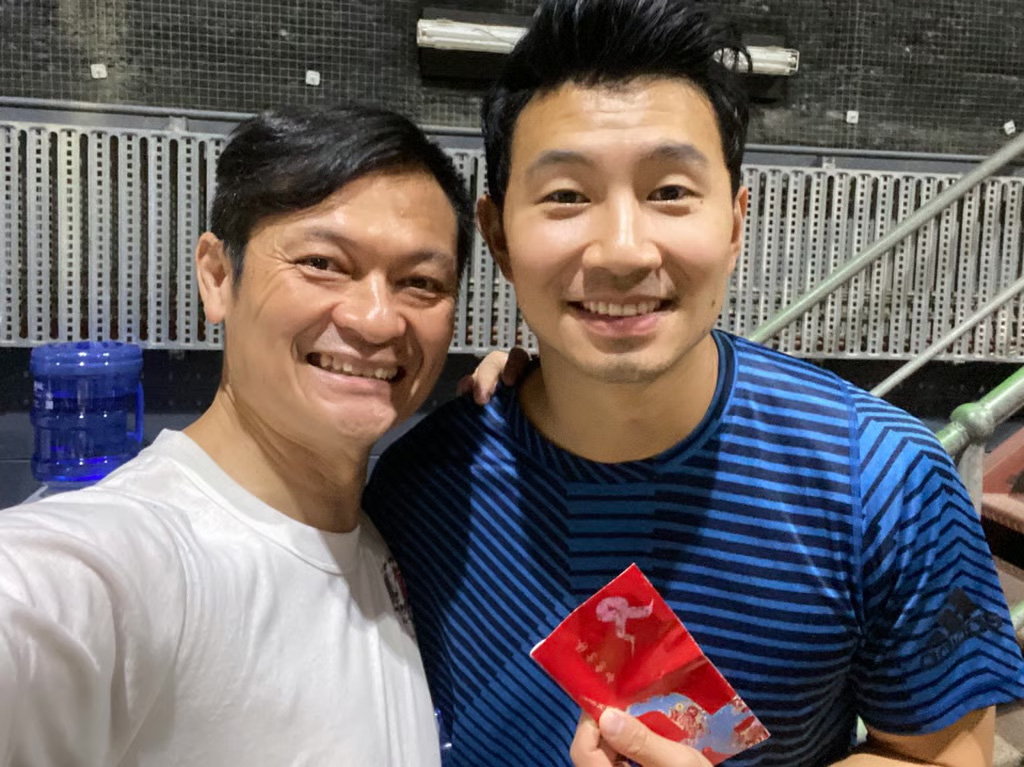
Cheng with Simu Liu on set of “Shang-Chi and the Legend of the Ten Rings”. Photo:courtesy Andy Cheng
Cheng’s aim post Shang-Chi is to expand his directing efforts. He feels that the overall situation for Asians working in Hollywood is now much better, noting the success of Everything Everywhere All At Once. “I came here early on for Rush Hour and Martial Law, and they were also shooting The Matrix,” he says. “Those were the first-ever Hollywood movies to have a full-on action package in the Hong Kong style.”
“Hong Kong action dominated Hollywood for 10 years after that, but then things slowed down. But now it is coming back. The success of Asians at the Oscars shows that viewers in the West can get into the Hong Kong style, and it will open the doors for all kinds of Asian content. This is the second Asian wave and this time we are going much further,” he says.