Before we had the internet to tell us what we were missing, we had the dial. Specifically, we had the upper end of it: the UHF band, channels 14 through 83, where the signal was weaker and the production budgets were lower and the programming made no attempt to compete with the networks because competition wasn’t the point. The point was to fill airtime cheaply, and by the early 1980s a small distribution company operating out of offices near Times Square had figured out that a package of dubbed Hong Kong martial arts films could do exactly that, and do it in a way that produced something nobody had predicted: an audience of American children who spent their Saturday afternoons watching films made in a language they couldn’t speak, set in a historical world they had no cultural framework for, featuring fight choreography that operated by laws of physics the Saturday cartoons before them had not prepared them for, and who came back the following week without needing to be asked.
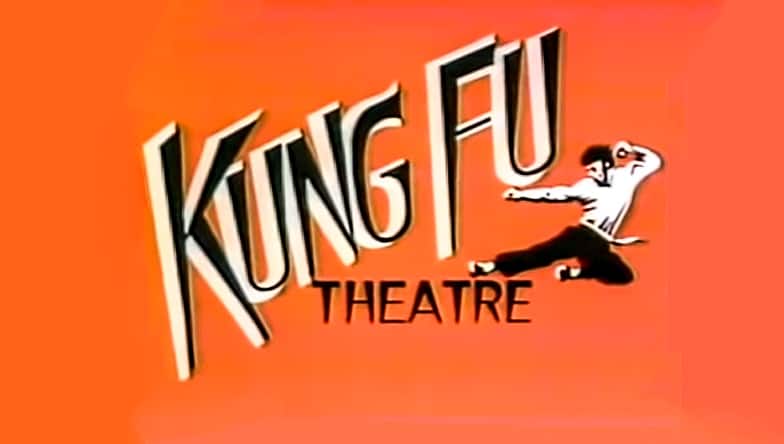
That weekly appointment is where a significant portion of the action cinema vocabulary of the next four decades was formed. The kids who grew up with Kung Fu Theater, Black Belt Theater, Drive-In Movie, Fist of Fury Theater, and whatever the local station decided to call its version of the same programming block, became the filmmakers and musicians and martial artists who carried the genre’s visual and moral grammar forward into the mainstream culture of the 1990s and beyond. The pipeline runs from a grainy UHF signal on a Saturday afternoon directly to The Matrix, to Wu-Tang Clan’s debut album, to Kill Bill, to John Wick. It runs through a generation of kids who understood, before anyone had given them the critical language to articulate it, that what they were watching was something genuinely different from anything American popular culture was producing, and that the difference mattered.
The first thing to understand about how this happened is that it happened twice. The initial wave of Hong Kong martial arts cinema in America was a theatrical phenomenon, concentrated in the early 1970s, centered primarily on Bruce Lee, and distributed through grindhouse theaters and urban movie houses that were already playing to the audiences most receptive to it. Five Fingers of Death arrived in March 1973 through Warner Bros., became the first Shaw Brothers film to top the American box office, and opened the door for a flood of imports that played 42nd Street and Chinatown theaters and drive-ins and neighborhood houses through the mid-1970s. The wave crested and receded, as waves do. Lee died in July 1973, the major studios lost interest once the initial commercial peak passed, and the smaller distributors who continued importing the films were supplying a market that had moved from the mainstream to the margins.
The second wave is the one that produced Kung Fu Theater, and it required a specific commercial insight that the industry had not previously considered. The prevailing assumption, through the 1970s, was that martial arts films were too violent to ever reach broadcast television. The compromise that network and local stations had arrived at with violence in general was calibrated for westerns and cop dramas, not for Shaw Brothers films in which men routinely got their skulls caved in with wooden staffs. The kung fu craze had produced a television series, Kung Fu, which had begun in 1972 with David Carradine in the lead and which handled the violence problem by limiting fight scenes to a handful of strikes per episode. It was a dramatic solution, not a genre solution. It produced good television while signaling that the genre in its raw form was considered unbroadcastable.
World Northal Corporation, a small New York-based distribution company founded in 1976, thought otherwise. Their reasoning was practical: if a martial arts film was properly edited, the graphic violence could be removed while leaving most of the movie intact. The fights, which were the commercial product being sold, could be preserved in sufficient form. The blood and the more explicit impact shots could go. What remained would be programmable, and what remained was still considerably more exciting than most of what was available for Saturday afternoon slots on independent stations. They signed an exclusive deal with Shaw Brothers in 1979, acquired the American broadcast rights to a substantial portion of the studio’s library, and set a staff editor named Larry Bensky to work creating television-friendly versions of films that had been made with no television market in mind. Bensky insisted, as a condition of his participation, that he receive on-screen credit for his edits. His name appeared in the opening cards of every film in the package, which may be the only case in the history of American broadcast television of a television editor receiving credit ahead of a director.
The first Black Belt Theater syndication package, thirteen Shaw Brothers films, went to local stations across the country in 1981 and 1982, distributed primarily through the Metromedia station group, which meant it hit most of the major urban markets simultaneously. In New York it ran on WNEW-TV Channel 5 under the name Drive-In Movie, which tells you something about the programming philosophy: this was the Saturday afternoon slot that had previously been used for cheap theatrical product, the double features and exploitation pictures that drive-ins had programmed, and the kung fu package fit that template while outperforming it commercially. The initial run was successful enough that World Northal produced five more packages, eventually placing over a hundred Shaw Brothers films into syndication. Other distributors and producers followed the model. Independent stations that weren’t part of the Metromedia group picked up competing packages. The slot name varied by market: Kung Fu Theater in some cities, Black Belt Theater in others, Fist of Fury Theater, Martial Arts Theater, Saturday Kung Fu. The name didn’t matter. The content was recognizable across every market, and it ran every Saturday afternoon for most of the decade.
What a kid encountered when they tuned in was not, to be clear, the Shaw Brothers at their best. The editing for broadcast television removed significant amounts of violence, and the pan-and-scan formatting that converted the original widescreen frame to a television aspect ratio cut out large portions of the image, which is a particular problem for fight choreography designed to be legible in a wide frame. The dubbing, produced in the early 1970s by voice artists largely from the UK and Australia, was serviceable at best and surreal at worst. The audio design was full of dubbed-in sound effects, the whooshes and clangs and echoing impact sounds that became the sonic signature of the genre in American memory. The continuity between shots was sometimes chaotic, partly because the original films had been edited for a theatrical experience and partly because Bensky’s broadcast edits had removed material that connected scenes. Characters appeared and disappeared. Plot logic occasionally collapsed. None of this diminished the audience’s investment, which is itself worth examining.
The children watching these films were not watching them the way critics watched them, or the way the Chinatown theater audiences of the 1970s had watched them, or the way dedicated fans with access to bootleg uncut prints watched them. They were watching them the way kids watch things: for physical excitement and moral legibility and the pleasure of seeing bodies do things that bodies were not supposed to be able to do. The fight sequences, even in their edited and pan-and-scanned and over-dubbed form, delivered all three. The physical excitement was unprecedented in American television programming for children. Saturday morning cartoons produced action that was visually simple and physically costless. The live-action adventure programming of the era was similarly defanged. What the Shaw Brothers films contained, even in their bowdlerized broadcast form, was something closer to genuine physical consequence: people hit each other and it looked like it hurt, people fell from heights and the falls registered in the viewer’s body, the violence had weight that the audience could feel. The moral structure was simple, but it was coherent: the protagonist trained, faced an antagonist who represented corrupt or brutal authority, and won through discipline and capability. The formula was transparent and satisfying, and it was sustained across dozens of films with enough variation in setting and technique to retain interest.
Gordon Liu became the face of the block in the way that a network star becomes the face of a show: a recognizable presence whose specific physical gifts children learned to watch for. His work in The 36th Chamber of Shaolin (1978, appearing in the broadcast package as The Master Killer) and Executioners from Shaolin built audience investment in a performer who could sustain a fight sequence with the physical specificity and expressive clarity that the format demanded. Ti Lung appeared repeatedly. Alexander Fu Sheng, whose screen charisma read across the dubbing and the editing as something genuinely star-level, built a following before his death in a car accident in 1983, which many of his American television audience didn’t learn about until years later. Lo Lieh, the Indonesian-born actor who had appeared in Five Fingers of Death in 1972 and started the whole thing, turned up repeatedly in various villain roles, becoming recognizable as the face of antagonism in the way that genre film economy requires. The audience was building genuine performer knowledge, which is a form of film education even if nobody was framing it that way.
The geography of the audience was not uniform, and this matters to understanding the block’s cultural impact. In the urban markets where the UHF signal was strongest and the local station infrastructure most established, the viewership skewed heavily toward Black and Latino communities. This was not coincidental. The first wave of Hong Kong cinema in American theaters had found its most enthusiastic audiences in those communities, and the economic logic of UHF television in the 1980s, which depended on the urban advertising markets where the signal was concentrated, pointed the programming toward the same audiences that had made the theatrical wave commercially viable a decade earlier. The relationship between these audiences and the films on their screens was not passive consumption. It was active, creative, and generative of culture in ways that would take years to become fully visible.
The clearest evidence of what that generation did with what it absorbed is the Wu-Tang Clan, whose debut album Enter the Wu-Tang (36 Chambers) dropped in 1993 and opened with a sample from Shaolin and Wu Tang, a 1983 kung fu film the group had encountered in exactly the same theater and television context that produced the Saturday afternoon block. The RZA has described his first meaningful encounter with the genre at a Manhattan grindhouse in 1992, watching Shaolin and Wu Tang in the same Times Square theater culture that had been the original American home of the Hong Kong imports. But the Saturday afternoon television block is the infrastructure that made the encounter possible, that had planted the genre’s imagery and moral vocabulary in the community’s consciousness in the years before. You don’t walk into a grindhouse theater in 1992 to watch a 1983 Hong Kong film unless the genre already has a hold on you, and for the Wu-Tang generation, that hold was established on Saturday afternoons on UHF channels when they were eight, nine, ten years old. The sample that opens the album is not nostalgia. It is continuation.
The dubbing deserves its own paragraph because it produced an effect that nobody in the production chain intended and that turned out to be central to the genre’s American identity. The English-language voice cast, recording quickly and cheaply in the early 1970s, produced dialogue that was overdramatic in a specific way: flattened in naturalistic texture, elevated in declarative force, written to match lip movements that were designed for a different language. The result was a register of screen speech that had no equivalent in American cinema, and that children absorbed as the voice of a specific kind of moral authority. The villain announced his intentions with an explicitness that American screen villainy rarely managed. The hero stated his principles without irony. The comic relief was broad and immediate. The emotional temperature of every scene was externalized in a way that American acting, trained toward interiority, couldn’t replicate. What looked like bad dubbing was also, inadvertently, a different and more direct form of dramatic address, and the children who grew up with it developed an ear for that directness that informed everything they made afterward.
The ninja film, which entered the rotation in significant numbers after the success of films like Enter the Ninja (1981) and the work of producers Godfrey Ho and Joseph Lai, gave the block a second phase and a second aesthetic. Ho and Lai were producing films under conditions that made the Shaw Brothers look like a prestige operation: they would purchase unused footage from unfinished Hong Kong productions, shoot new footage with Western actors, and edit the two together into a nominally coherent film that could be marketed under an English title. The results were incoherent in ways that the Shaw Brothers films, even heavily edited, were not. They were also, for children watching on Saturday afternoon, frequently more immediately exciting in their surface elements: the ninja costume was visually distinctive, the throwing stars and smoke bombs were toyetic in a way that period kung fu choreography was not, and the mythology of the ninja as a figure of supernatural stealth and capability was being simultaneously reinforced by the boom in ninja-themed toys and cartoons and comics that the early 1980s produced. The ninja film phase of the block attracted a slightly different audience than the Shaw Brothers films, with less investment in technique and more in imagery, and the two phases coexisted on the same afternoon slot without obvious friction.
What the block produced, cumulatively, across its peak years from roughly 1982 to 1989, was a generation of American viewers with a working knowledge of Hong Kong martial arts cinema that had no institutional support and no critical infrastructure. There were no reviews in mainstream publications. There were no video stores with curated sections. There were no English-language books on the subject. The knowledge was accumulated entirely through repeated viewing, through conversation among peers who were watching the same Saturday slots in different cities, through the informal networks of shared information that exist in any fan culture that the mainstream has decided to ignore. The martial arts gym boom of the 1980s, which saw enrollment in karate, kung fu, and related disciplines rise dramatically across the country, was not caused by Kung Fu Theater alone, but the correlation is close enough that dismissing the connection requires more argument than accepting it. Children who watched people train to physical mastery on their television screens on Saturday afternoons went looking for places to do the same thing on Saturday mornings.
The block’s decline was gradual rather than sudden. The World Northal distribution agreement with Shaw Brothers ended in the mid-1980s, which meant the supply of new Shaw Brothers product for the syndication packages dried up, though the existing packages continued to circulate. The proliferation of VHS changed the economics of independent television programming, offering stations alternatives to syndicated packages and offering viewers alternatives to appointment television. Fox launched as a fourth network in 1986 and began buying up the independent stations that had been the primary carriers of the kung fu block, replacing their programming with network fare. Cable television was providing urban viewers with options that UHF had previously monopolized. By the end of the decade, the dedicated Saturday afternoon martial arts block had largely disappeared from the American television landscape, replaced by infomercials and network affiliations and the changing economics of a medium in transition.
What it had produced in its decade of operation was not replaceable by any institutional means. A generation of American viewers, concentrated in urban markets, spanning communities that mainstream American culture had always treated as separate, had been given a common visual and moral vocabulary derived from a cinema that neither of their respective mainstream traditions had produced. The children who watched Gordon Liu train his way through the 36 chambers understood something about discipline and physical mastery and the relationship between suffering and capability that the Saturday morning cartoons running two hours earlier on the same stations had not conveyed and could not have conveyed. They understood it, specifically, because the films were foreign, because the distance between the culture that produced them and the culture receiving them stripped away the ambient familiarity that allows an audience to watch without really seeing. You had to pay attention. Nothing was assumed. Every technique was strange and therefore visible, and visibility is where education begins.
The kids who were watching Kung Fu Theater on Saturday afternoon in 1983 are in their late forties and early fifties now. Some of them made The Matrix. Some of them made Kill Bill. Some of them made Enter the Wu-Tang. Some of them opened martial arts schools in neighborhoods where martial arts schools hadn’t previously existed. Some of them just remember where they were every Saturday at three, and what it felt like when the WorldNorthal logo came up and the Mussorgsky synthesizer cue played and the dubbing started and the first fight sequence arrived, wide and clear and impossible and better than anything else on television.